Drywall Repair in Andrews, TX
Seams that split, doorknob holes, tea-colored rings after a roof or AC leak, texture that has to blend in: tap the problem that fits, and a nearby drywall pro prices it and brings the wall back to ready-for-paint.
Call 7 days, 7am–9pm
Once we hear what happened, the Andrews-area pro who would handle it phones you to talk it over and work out a number.
01. Is this one you can handle with a putty knife?
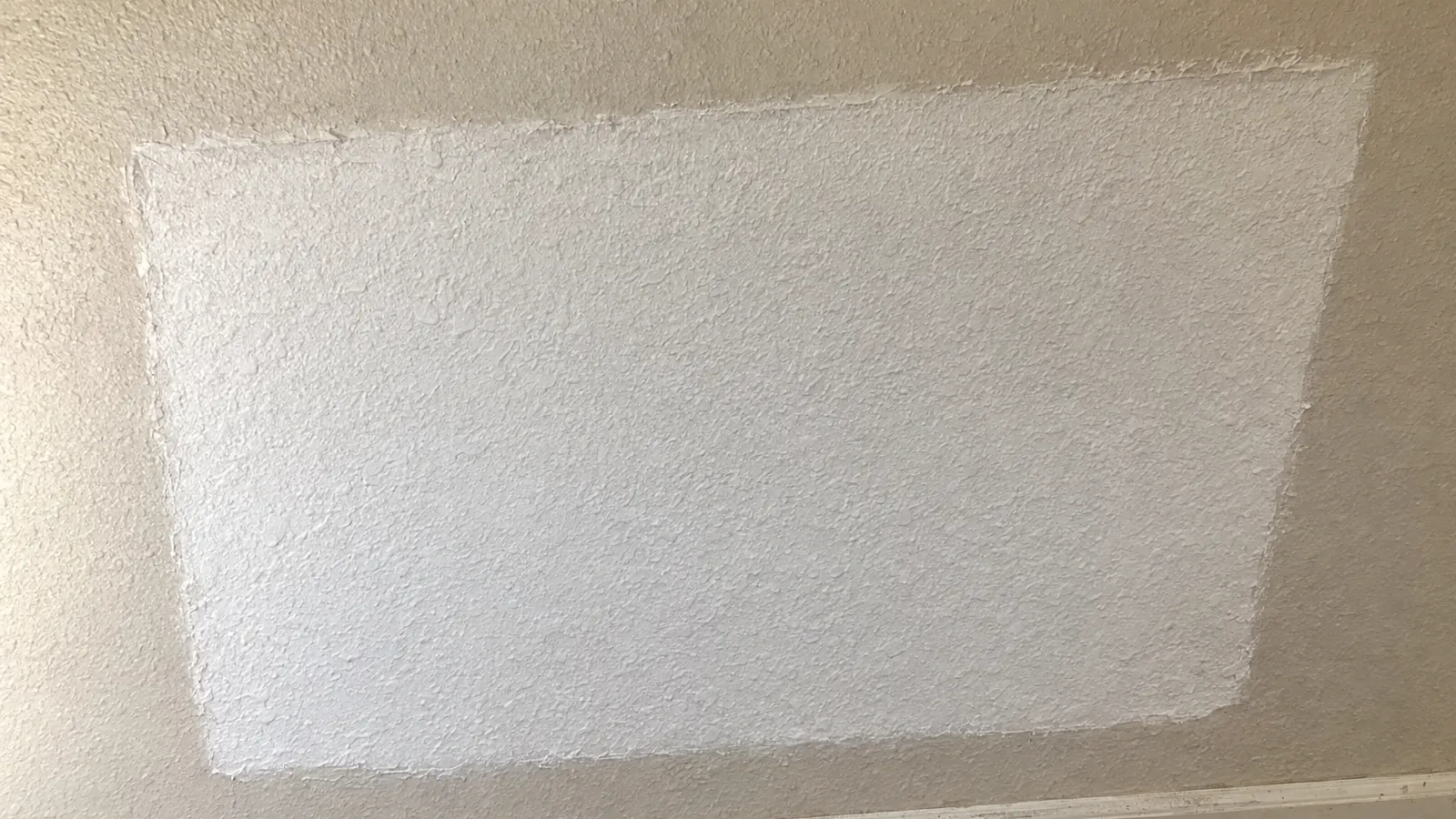
Sometimes, yes. A nail hole, a hairline crack in new paint or a shallow ding from a chair back usually needs nothing more than lightweight spackle, a flexible knife, a fine sanding sponge and a dab of the wall color. If the damage is smaller than a quarter and the gypsum's paper skin isn't torn, it makes a fair Saturday project.
Here is where the answer tips toward hiring it out:
- You could fit your fist into the hole, or the gypsum around it crumbles when pressed.
- A crack has reappeared in the same line after an earlier fix, or runs on a slant from a door or window corner.
- The wall carries knockdown or orange-peel texture, so a smooth spot would stand out.
- The ceiling has a tea-colored ring, or the board feels soft or damp.
- The damage is overhead, where new gypsum has to be fastened to framing and mud worked above your head.
So the honest test is this: if the fix means rebuilding a texture or tracking down why the damage happened, paying for it usually spares you a second attempt. Andrews gets about 14 inches of rain in a normal year, and air that dry makes mud stiffen fast on the knife. That speeds drying, but it shortens the time you have to blend an edge, and a rushed edge is what gives away a first try once the paint dries.
02. The four repairs, one page each
Most damage to walls and ceilings lands in one of these four groups. Each page covers the usual cause, what a solid repair takes and what nudges the price up or down.
Seam & settling cracks
Split tape joints and slanted cracks leaving door and window corners, re-taped instead of smeared shut.
How seam cracks get fixedTexture matching
Knockdown and orange peel rebuilt over a repair so the new piece reads like the old wall.
How a texture is matchedCeiling stains & leaks
Tea-colored rings and spongy board left by roof, AC or pipe leaks, sealed or replaced and refinished.
Fixing a leak-stained ceilingHoles & dents
Doorknob punches, torn-out anchors and furniture dings closed with new gypsum and finished for paint.
Patching a hole properly
03. Which of these looks like your wall?
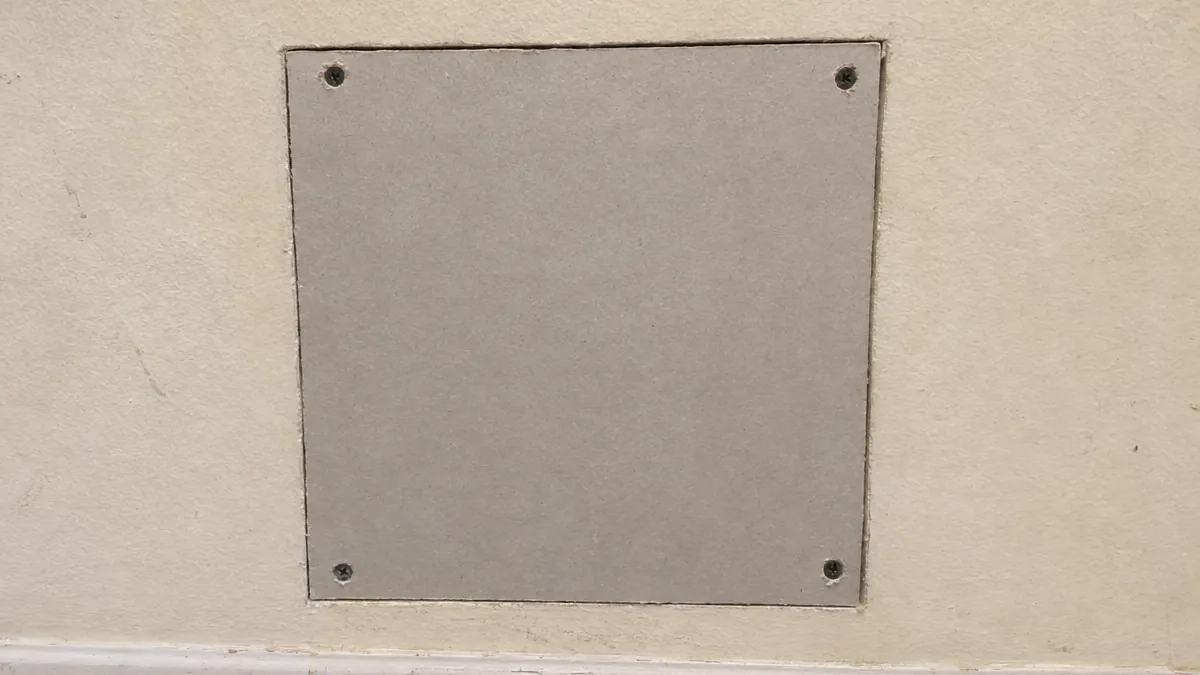
Tap the nearest match. You'll land on the quote form with that choice filled in, so all that's left is a name, a phone number and a line about the damage.
04. How a repair day runs, from drop cloth to dry
What actually goes on once the work begins? Fewer surprises than most people expect. A careful drywall repair runs through the same stages whether it's a split seam or a cut-open ceiling:
- Protecting the room. Furniture comes off the wall, floors get covered and nearby vents are taped shut, because sanding grit rides the ductwork.
- Opening up the damage. Loose tape is pulled off, a crack is carved open a little so the mud can grip, and soggy or crumbly gypsum is trimmed away until firm board and framing remain.
- Tape or a new piece. Seams get fresh tape set into mud; holes get a new piece of gypsum fastened to backing or studs.
- Drying between passes. Each coat reaches a bit farther out than its predecessor and needs its own drying time. That is why a small repair can stretch across two days.
- Texture and primer. The surface is sanded, the texture rebuilt, and primer rolled over the whole repaired area.
- Cleanup. A tidy finish means the dust gets vacuumed instead of swept, and the wall can take your roller next.
How long does all of that take? It depends on the number of coats and the kind of mud. Setting-type mud, sold as a dry powder, hardens chemically and can often take another coat that afternoon; premixed mud has to air-dry, which goes faster in West Texas than it would somewhere humid.
05. What heat, dry air and summer storms do to walls here
Why does drywall in Andrews crack and stain the way it does? Mostly the weather. The town sits at 3,176 feet on the southern High Plains with a semiarid climate, and the calendar shows up on the walls:
- Summer heat
- July highs average 95.6°F, and the hottest reading on record is 113°F, from June 1994. Attic heat makes roof framing swell and shrink, and the strain turns up as cracks along taped ceiling joints and in the corner where ceiling and wall meet.
- Cold winter nights
- January lows average 31.3°F. With the furnace running, indoor air gets drier still and framing lumber shrinks a hair, so seam cracks that closed in summer open up again.
- A dry year overall
- Normal rainfall is a little under 14 inches a year. Dry air is kind to drying mud but hard on lumber that hasn't settled, part of the reason newer houses get nail pops.
- Early-summer storms
- June is the wettest month, averaging 2.38 inches. A storm that finds a weak spot in the roof, or a condensate drain that backs up while the AC works hard, usually shows itself as a tan ring overhead.
- Sandy ground
- Sandy soils cover most of Andrews County. When the ground beneath a slab wets and dries unevenly, a house can shift slightly, and slanted cracks off door and window corners are the usual giveaway.
06. Five drywall beliefs that don't hold up
- “A bead of caulk will take care of a seam crack.”
Caulk bridges the gap for a season or so, but a split taped joint needs new tape set in mud so both sheets move together again.
- “Paint will hide a water ring.”
The minerals in a leak stain creep back up through ordinary latex. Stain-sealing primer exists to lock the ring in, and it belongs on the ceiling only after the leak is dealt with and the board is dry.
- “Textured walls can't be matched.”
Knockdown and orange peel can be matched closely by thinning the mix and adjusting how it is sprayed. Under low sideways light, a careful eye may still spot the border.
- “A bigger patch means a worse repair.”
Trimming away to firm gypsum and solid framing gives the new piece something to grip. A neat larger patch beats a small one fastened to crumbling board.
- “New houses don't crack.”
Framing lumber keeps drying and settling for the first few seasons, so nail pops and hairline seam cracks are normal in a newer home.
07. Which towns are covered besides Andrews?
Repairs are arranged in Andrews and in these communities close by:
- Andrews
- Seat of Andrews County and home to 13,487 residents as of 2020, with houses from every decade since the 1940s oil boom.
- McKinney Acres
- The census-designated place hugging the city's southern edge, where much of the housing is manufactured.
- Seminole
- The Gaines County seat, north of Andrews.
- Denver City
- North-northwest of town, the Yoakum County city that traces its beginnings to the Wasson oil pool.
- Goldsmith and Notrees
- Two small Ector County places to the south and south-southwest.
- Odessa and Kermit
- The Ector and Winkler County seats, south-southeast and southwest.
The towns page has how each nearby community fits in.
08. From your first message to a wall you can paint
Who handles what, and when do you learn the price? Here it is in five steps.
- You phone us, or fire a photo over by text. We ask how it happened, roughly how big it is and whether the surface is textured. Holding a ruler or a light switch in the shot helps with scale.
- The pro who'd do the work rings you. They talk through the damage, ask whatever the picture didn't show and arrange the quote.
- The number comes first. Nothing gets opened, cut or sanded without your OK on the price.
- The work gets booked and done. Coats, drying and texture are planned around how you use the room.
- The surface is primed and textured. All that's left after that is your paint and your color.
What does a repair usually run? It depends on size, height and texture. This Old House's drywall cost roundup lists a small hole patched by a pro at about $60 to $200, crack repair at $60 to $330, and a hole in a ceiling at $320 to $1,300. Those are countrywide averages; an Andrews job gets its own quote from whoever prices the wall.
More detail on each step, and answers to the usual worries about dust and drying, are on the process page. Read the FAQ
09. Nail pops and corner cracks in newer houses
Is something wrong with a house that's only a few seasons old and already cracking? Usually not. Census estimates put 777 of the homes standing in Andrews today in the 2010s and another 91 at 2020 or newer, and houses that young go through a predictable settling stage.
Here is what that tends to look like:
- Nail or screw pops: small round bumps or rings in a row, each one a fastener the shrinking stud has nudged outward.
- Ceiling-corner cracks: a line at the ceiling's edge above an inside wall that gapes in winter and tightens in summer. Roof trusses can bow upward slightly when the attic and the rooms below sit at different humidity, which finishers call truss uplift.
- Slanted cracks over doors: hairlines climbing from a door or window corner as framing and slab settle.
So what should you do? For pops, the usual fix is to sink a new screw right next to the popped one, reset the popped one, and a dab of mud over both. Ceiling-corner cracks caused by truss movement tend to reopen when simply re-taped, so a pro may suggest a flexible corner treatment instead. It also pays to let the house go through one whole winter and summer before a big round of repairs, so most of its moving is done first.
10. Patch, new board or skim coat, side by side
Which kind of repair does your wall actually need? The table puts the three main approaches next to each other.
| Spot patch | Cut in a new section | Skim coat the wall | |
|---|---|---|---|
| Suits | Nail holes, small dents, short cracks | Fist-size holes and up, leak-softened board | Lots of small dings, torn paper, old lumpy repairs |
| Board removed | None | Damaged area trimmed to framing | None |
| Coats of mud | One to two | Usually three | Two thin passes across the entire wall |
| Texture work | Small touch-up | Rebuilt over the patch | Whole wall re-textured or left smooth |
| Dust | Very little | Moderate, from cutting and sanding | The most, since every inch is sanded |
| Time span | Often done in one go | Usually more than one day, for drying | Usually more than one day, for drying |
11. Three parts of the area, three kinds of housing
- Inside the Andrews city limits
The city has 5,138 homes, and 1,346 of them went up in the 1950s, more than in any other decade; 2,866 in all predate 1980. Houses that age have usually been repainted and touched up again and again, so a repair often begins by undoing an earlier fix, and texture sprayed over older texture takes more care to copy.
- McKinney Acres
This census-designated place runs along the city's southern border, and survey estimates count most of its homes as mobile homes. Many manufactured homes use vinyl-covered gypsum panels joined with battens instead of taped and textured drywall, so a repair there may mean swapping a panel rather than mudding one.
- The rest of Andrews County
Countywide there are 1,554 mobile homes, 633 of them inside the city, and 1,656 homes that went up from 2010 on. Out in the county, a phone call and a clear picture matter even more, since the pro can sort out the materials before arranging the quote.
12. Ready to have the wall priced?
Give us a ring, or fire a photo of the damage over by text, and say roughly which room it's in. You'll know the figure ahead of scheduling anything.
Whoever prices your job calls you back to discuss the damage and the choices you have.